
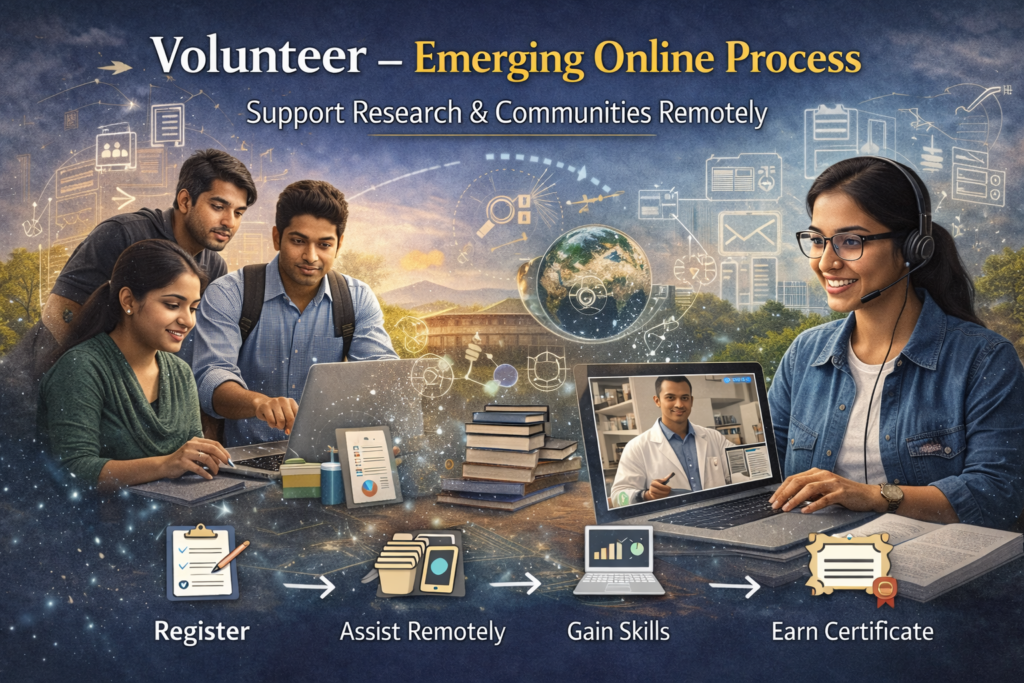
Primary Sources of Volunteer Fund Generation
Donations & Individual Contributions How:
- Launch recurring donation programs through your website — “Sponsor a Volunteer” or “Support a Student Intern.”
- Use payment gateways like Razorpay, PayU, or Stripe to collect monthly/annual contributions.
- Offer small donation tiers (₹100–₹1000/month) to attract more people.
- Issue 80G tax-exemption certificates and digital receipts (like Form 10BE under Income Tax Act) to encourage repeat donors.
Why it works:
People love to see direct impact — e.g., “Your ₹500 supports one day of fieldwork by a community volunteer.”
Corporate CSR Partnerships How:
- Approach corporate firms under their CSR (Corporate Social Responsibility) initiatives (as per Section 135 of the Companies Act, 2013).
- Position the Volunteer Fund as a CSR project that trains youth, uplifts underprivileged communities, and builds environmental awareness — all of which are CSR-eligible themes.
- Sign MoUs with corporations for annual funding of volunteers under research, education, and sustainability themes.
- Offer transparent quarterly reports to partners.
Example:
A company can fund 50 volunteers for a year under a “Green India Education Fellowship” named after their brand.
Educational Institution Collaborations How:
- Partner with universities, colleges, and schools for student internships.
- Institutions can contribute financially (small sponsorships per intern) or in-kind (resources, training materials).
- Build a model: “Each college funds 5 of its students to join the Foundation as field researchers.”
- Use MoUs with institutions to sustain recurring contributions each semester.
Result:
Regular influx of motivated student volunteers + steady institutional support for the Volunteer Fund.
Research & Project Grants How:
- Apply for government or private research grants related to climate action, education, biodiversity, or social innovation.
- Budget a fixed 10–15% of every project grant towards the Volunteer Fund (as manpower or engagement cost).
- Examples of funders: DST, DBT, ICSSR, UNDP, UNICEF, Tata Trusts, Azim Premji Foundation, etc.
Result:
Long-term sustainability with dedicated budget lines for volunteer support in all funded projects.
Online Campaigns & Crowdfunding How:
- Run digital fundraising campaigns on platforms like Ketto, Milaap, or ImpactGuru, specifically for “Volunteer Empowerment.”
- Create emotionally engaging visuals and stories — “Meet Riya, a student volunteer teaching science to rural children.”
- Promote through social media, email newsletters, and WhatsApp groups.
- Keep campaign goals small and achievable (₹50,000–₹2,00,000 per campaign).
Why it works:
Transparency + emotional appeal = higher engagement and trust.
Membership & Fellowship Programs How:
- Introduce a “Friend of Lotus” Membership Plan where members contribute annually and receive updates, certificates, or access to seminars.
- Launch a Lotus Fellowship Program for those funding volunteers from SC/ST/General poor communities.
- Use tiered memberships: Bronze, Silver, Gold, and Platinum, based on contribution levels.
Result:
Predictable yearly income + loyal network of recurring supporters.
Events, Webinars & Merchandise How:
- Conduct paid online webinars, workshops, and conferences on research, sustainability, and education topics.
- Sell merchandise (eco-friendly notebooks, T-shirts, or bookmarks with inspirational messages).
- Allocate 50–70% of event profits directly to the Volunteer Fund.
Result:
Awareness + engagement + income generation.
Partner NGO and International Collaborations How:
- Collaborate with global NGOs, research bodies, and volunteer networks (like UNV, AIESEC, or GiveIndia).
- Jointly apply for multi-country educational or sustainability grants.
- Exchange volunteers internationally under cultural or skill-exchange programs.
Result:
Global recognition and shared resources for volunteer empowerment.
Who Manages the Volunteer Fund
To maintain transparency and accountability, the Fund should be governed by a Volunteer Fund Committee (VFC) consisting of:
- Program Director (Chairperson) – final decision-maker for fund disbursement.
- Finance & Compliance Officer (Treasurer) – manages accounting, audits, and tax compliance.
- Volunteer Coordinator – keeps records of active volunteers and their performance-based eligibility.
- CSR & Partnerships Officer – brings new funders and maintains relationships.
- Advisory Member (External) – reviews the fund’s ethical use and impact.
Fund Management Cycle
- Collection: Through online donations, corporate partnerships, and grants.
- Allocation: Based on the payout structure (stipends, training, travel).
- Monitoring: Monthly review by Volunteer Fund Committee.
- Reporting: Quarterly financial statement shared publicly on the organization’s website.
- Audit: Annual internal and external audits to ensure transparency.
Transparency & Trust-Building Practices
- Maintain a public “Volunteer Impact Dashboard” showing fund usage.
- Issue digital donor certificates instantly via the website.
- Highlight volunteer stories in newsletters to show real impact.
- Provide Form 10BE / 80G certificates for tax benefits (mandatory per IT Act).
- Conduct annual public impact meet-ups (online/offline) with funders and volunteers.
Key Takeaways
- The Volunteer Fund is not a single donation—it’s a sustainable system built through multiple online and institutional channels.
- Keep the Fund transparent, audited, and story-driven — people donate when they see the human impact.
- The Volunteer Fund Committee ensures integrity, and the online campaigns ensure visibility.
- Every rupee spent on volunteers multiplies the organization’s social and educational reach.
Concrete example (for clarity)
Assume Volunteer Support Fund = ₹100,000 for a month/quarter:
- Student Interns 18% → ₹18,000
- Field Volunteers 10% → ₹10,000
- Digital/Research Volunteers 7% → ₹7,000
- Fundraising Volunteers 5% → ₹5,000
- Expert Honoraria 5% → ₹5,000
- Travel & Field Allowance 15% → ₹15,000
- Training & Capacity 10% → ₹10,000
- Coordination & Admin 12% → ₹12,000
- M&E 6% → ₹6,000
- Recognition & Bonuses 4% → ₹4,000
- Contingency 8% → ₹8,000
(These sum to ₹100,000.)
How you convert the category amounts to per-person stipends depends on volunteer count. Example: if you have 6 student interns this month, divide ₹18,000 among them per the agreed rule (equal share or performance-weighted).
Suggested payout mechanics & frequency
- Student interns: monthly stipend (or project completion lumpsum). Require weekly progress reports and mentor sign-off.
- Field volunteers: per-month allowance + travel reimbursements against receipts.
- Digital/research volunteers: monthly micropayments or per-deliverable payment.
- Fundraising volunteers: commission-based payout on confirmed, realized contributions (2–5% of funds they secure, drawn from the 5% pool). Commission capped to avoid conflicts.
- Expert volunteers: honoraria per session or per workshop (paid from the 5% honoraria pool).
Payment frequency: monthly or on completion of defined milestones. Reimbursements (travel, material purchase) processed within 15 working days after submission of receipts to Finance.
Note: All payouts labeled as stipends/honoraria — volunteers are not employees; communicate this clearly. Stipends may be subject to tax rules — Finance must advise and withhold taxes where applicable.